google-site-verification: googlec3070f037ee47936.html
Water Removal Service · Long Beach

Water Removal Long Beach CA

Rapid extraction, moisture tracking, and controlled drying help limit damage after a leak, overflow, or indoor flooding.

Residential & Commercial Measured Moisture Tracking Long Beach Service
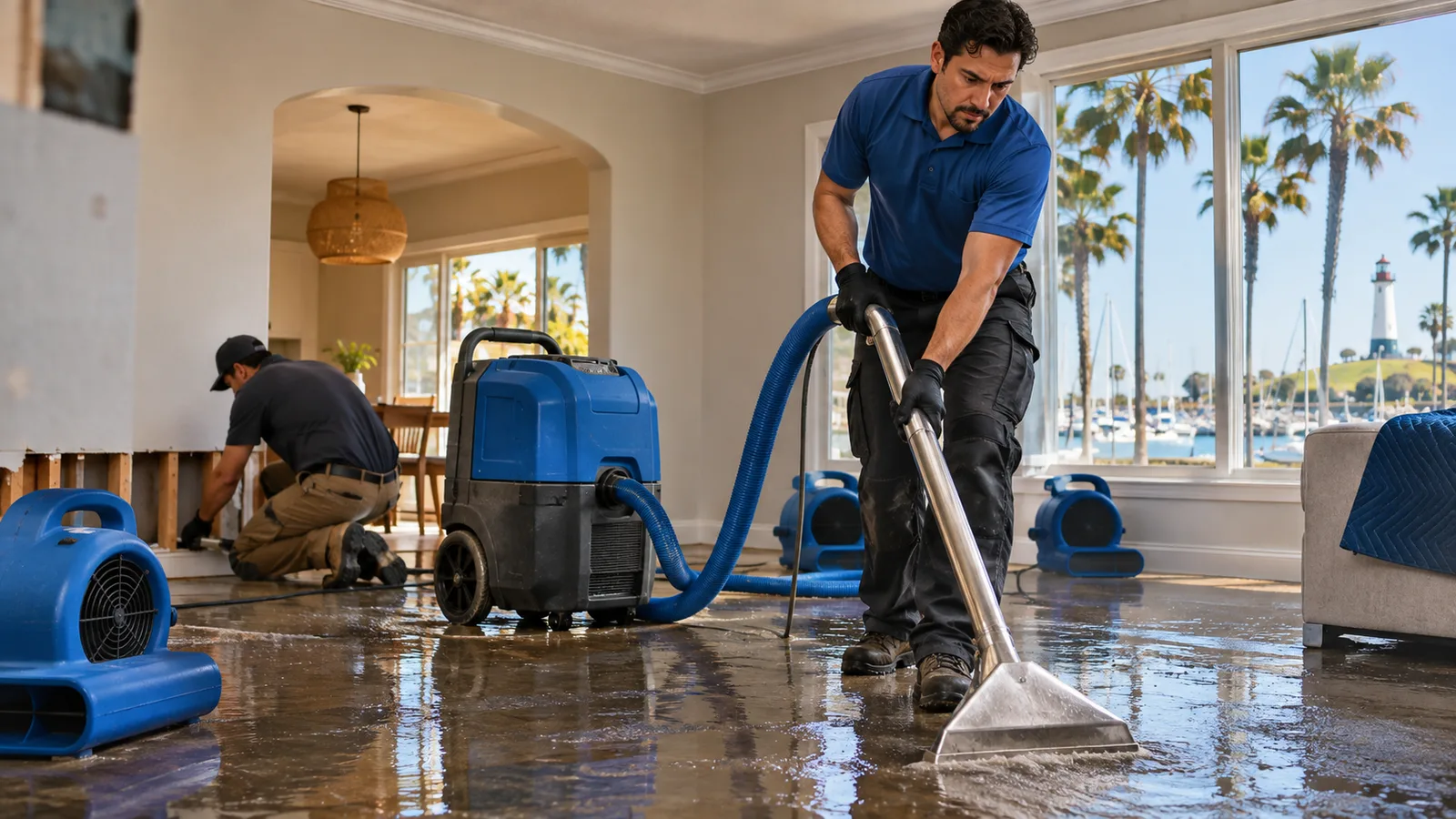
A water removal crew using commercial extraction equipment inside a Long Beach home after an indoor flood.

Fast Help When Water Is Spreading

When standing water reaches flooring, walls, cabinets, or stored belongings, prompt action can reduce how far the damage travels. Professional water removal in Long Beach, CA starts with identifying the source, checking electrical and structural hazards, and extracting accessible water with equipment suited to the affected materials.

Long Beach CA Water Damage Restoration handles residential and commercial water removal after plumbing leaks, appliance failures, sink or tub overflows, roof intrusion, and other unexpected releases. Our team builds the work plan around the water source, the materials involved, and moisture readings taken throughout the affected area.

Visible water is only part of the problem. Moisture can migrate beneath floating floors, soak into carpet pad, wick into drywall, and collect inside wall cavities. Extraction is followed by targeted drying and repeated measurements so equipment is adjusted according to conditions rather than removed on a preset schedule.
What Professional Water Removal Includes

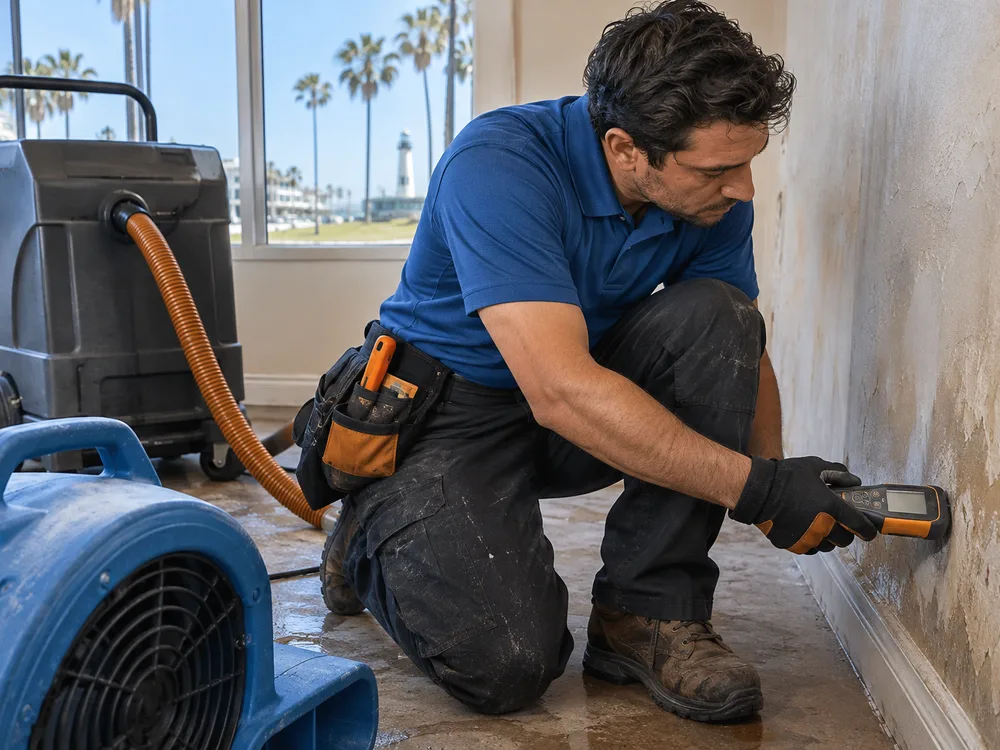
A technician taking moisture-meter readings along the base of a damp wall while an extractor and air mover are positioned nearby.
Direct moisture readings guide the drying plan and equipment placement.

The first priority is to stop or isolate the source when that can be done safely. Crews then inspect the affected rooms and classify the water by contamination risk. Clean water from a supply line requires different handling than water that has contacted soil, sewage, or other contaminants.

Truck-mounted or portable extractors remove standing water and recover moisture from carpet and other surfaces. Submersible pumps may be used when water is deep enough for safe operation. Moisture meters help locate damp drywall and wood, while thermal imaging can identify temperature patterns that warrant closer testing. Thermal images support the inspection, but direct meter readings confirm whether a material is wet.

After extraction, air movers promote evaporation and commercial dehumidifiers collect moisture from the air. Containment may be used to focus drying or separate an affected work area. Materials that cannot be safely cleaned or dried may need removal, but demolition should follow inspection and documentation rather than assumption.

Water Removal for Long Beach Properties

Older Homes and Tight Cavities

Belmont Heights and Bluff Heights contain older homes where original wood flooring, plaster, built-ins, and enclosed wall cavities may require careful moisture mapping before materials are disturbed.

Condos and Multifamily Buildings

Downtown Long Beach has many apartments and condominiums. Water can move between units through shared walls, ceilings, pipe chases, and floor assemblies, so access and building-management coordination may affect the work plan.

Slab-on-Grade Houses

Many Southern California homes are built on concrete slabs. A supply-line or appliance leak can push water under baseboards, cabinets, and floor coverings even when the slab itself does not absorb much water.

Coastal Air Conditions

Long Beach's coastal humidity can slow evaporation compared with dry inland conditions. Dehumidification and measured airflow help maintain useful drying conditions inside the affected space.

Commercial Occupancies

Stores, offices, restaurants, and other commercial spaces may need phased extraction, protected walkways, or work-area containment to address wet materials while accounting for occupants and operating hours.

Documented Moisture Checks

Initial and follow-up readings show where moisture remains. The drying setup can then be changed as individual rooms and materials respond.

Our Water Removal Process

  1. 01

    Initial Safety and Source Check

    The crew evaluates the water source, affected rooms, contamination concerns, and immediate hazards. If water is near electrical components, the area should remain undisturbed until it is assessed safely.

  2. 02

    Moisture Inspection

    Meters are used on flooring, walls, trim, cabinets, and nearby materials to map the affected area. Inspection may extend beyond visible staining because water often travels along seams and through cavities.

  3. 03

    Standing-Water Extraction

    Pumps, wet vacuums, or commercial extractors remove bulk water. Thorough extraction shortens the drying phase because equipment does not have to evaporate water that could have been physically recovered.

  4. 04

    Cleaning and Material Decisions

    Affected surfaces are cleaned according to the source and material. Unsalvageable carpet pad, swollen composite products, or contaminated porous materials may be removed when cleaning and drying are not appropriate.

  5. 05

    Controlled Drying

    Air movers and dehumidifiers are positioned to manage evaporation and indoor humidity. Equipment selection and placement depend on room size, wet materials, temperature, and access.

  6. 06

    Monitoring and Completion

    Moisture readings are checked during drying and compared with suitable unaffected materials or established dry goals. Equipment remains only as long as readings and conditions support its use.

What to Do Before the Crew Arrives

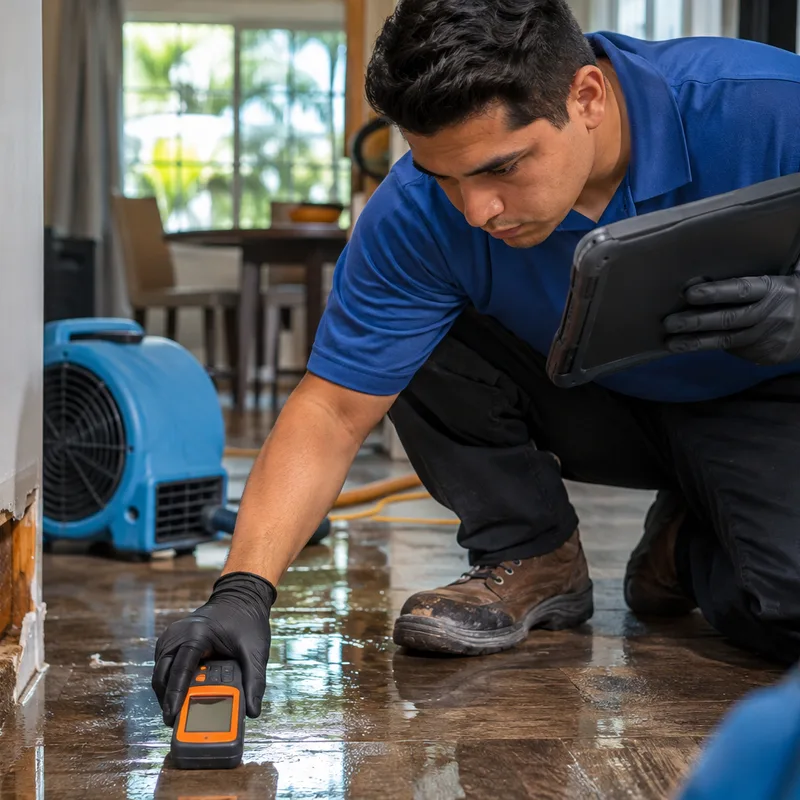
Close view of a technician documenting a wet floor and recording moisture readings before extraction begins.
Photos and initial readings establish the affected area before drying starts.

Stop the source only if it is safe and straightforward, such as closing an accessible fixture valve. Avoid rooms with sagging ceilings, submerged outlets, wet electrical equipment, sewage, or water that may have entered from outdoors. Do not use a household vacuum to collect water.

If conditions are safe, move dry valuables away from the wet area and place furniture legs on protective blocks or foil. Take photos of the source and affected rooms before moving items. Keep receipts for emergency expenses and note when the incident was discovered. These records may help when speaking with an insurer, although coverage and claim decisions belong to the insurance carrier.

Do not pull up flooring, open walls, or discard damaged property solely to speed the process unless safety requires it or the appropriate party has approved the work. Early documentation gives the property owner, contractor, building manager, and insurer a clearer record of initial conditions.

A Drying Plan Based on Evidence

A reliable scope should identify the affected rooms, expected extraction work, equipment plan, monitoring needs, and any materials recommended for removal. It should also distinguish water removal and drying from later repairs. Asking for that distinction makes it easier to understand what is included and what may require separate approval.

Crews should be prepared to explain the water category, show where moisture was detected, and describe why each type of equipment is being used. Meter readings matter more than appearances. A wall surface may look dry while the base plate, insulation, or back of the drywall remains damp.

Long Beach CA Water Damage Restoration focuses on removing accessible water quickly and checking the materials that water may have reached. The goal is a defensible drying process with documented conditions, sensible material decisions, and clear communication about the next step.

Arrange an inspection promptly so the affected area can be mapped, extracted, and placed under controlled drying before moisture spreads farther.

Call Now (562) 362-3304

Water Removal Questions

How quickly can water removal begin in Long Beach, CA?
Water removal should begin as soon as the source and work area can be approached safely. Travel, access, active leaks, electrical hazards, and the size of the incident affect the start time. In a Downtown Long Beach condominium, building access and coordination with management may also determine when crews can reach a unit or shared utility area.
How long does structural drying usually take?
Many clean-water drying projects take several days, but the actual timeline is set by moisture readings rather than a fixed promise. Wood flooring, wall cavities, cabinets, insulation, coastal humidity, and delayed discovery can extend the process. Readings should be checked during the work before air movers and dehumidifiers are removed.
Can wet carpet and hardwood flooring be saved?
Some wet carpet and hardwood can be dried, but salvage depends on the water source, exposure time, installation, backing or pad, finish, and physical damage. Clean water caught early provides more options than contaminated water. Hardwood should be checked at multiple points because moisture can remain between boards and in the subfloor.
Does water removal include removing drywall?
Drywall is removed only when inspection shows that drying in place is unsafe or impractical. Contamination, loss of structural integrity, wet insulation, restricted airflow, and prolonged saturation influence that decision. Sound drywall affected by clean water may sometimes be dried with the baseboard removed and the cavity properly addressed.
Will insurance pay for emergency water removal?
Coverage depends on the policy, cause of loss, exclusions, and the insurer's claim decision. Sudden accidental releases and long-term seepage are often treated differently. Photograph the affected Long Beach property, preserve relevant receipts, and report the incident promptly. A contractor can document conditions and work performed but cannot guarantee coverage.
Is water removal safe to handle without professional equipment?
A very small clean-water spill may be manageable, but widespread water, hidden moisture, sewage, sagging materials, or electrical exposure requires professional assessment. Household fans do not control humidity, and a standard vacuum is unsafe for water collection. Keep people and pets away from questionable water until its source and hazards are understood.

Start Water Removal Before the Damage Spreads

Describe what happened, when it was discovered, and which rooms are affected. Long Beach CA Water Damage Restoration will outline the immediate safety, extraction, and drying priorities.