google-site-verification: googlec3070f037ee47936.html
Water Mitigation Service · Long Beach

Water Mitigation in Long Beach, CA

Fast water removal, controlled drying, and careful moisture tracking help limit damage before it spreads through floors, walls, and concealed cavities.

Controlled Drying Moisture Tracking Long Beach Properties
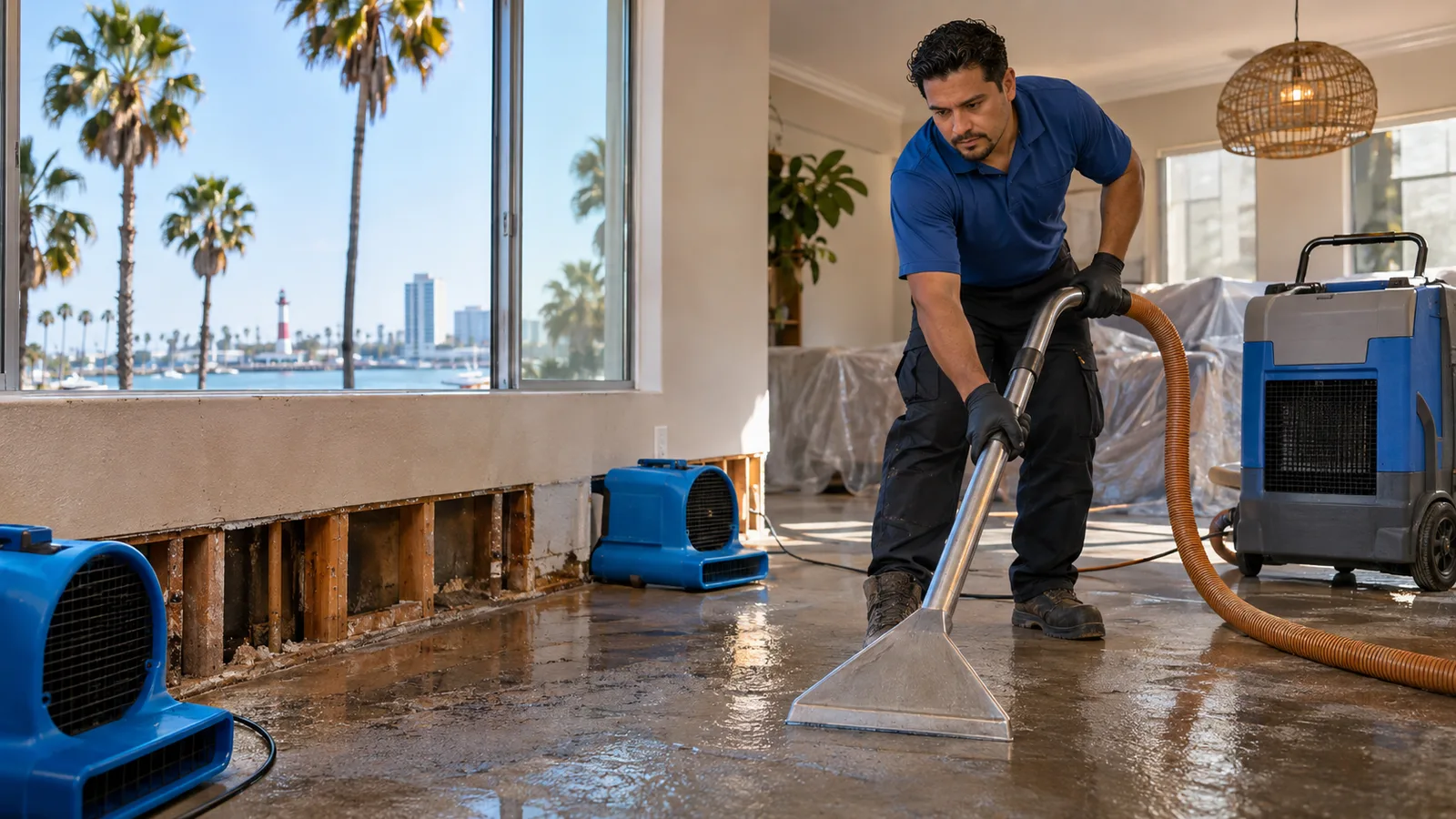
A water mitigation technician operating professional extraction and drying equipment inside a Long Beach residence.

Fast Action When Water Enters Your Property

Water mitigation Long Beach CA property owners can rely on starts with controlling the source, identifying affected materials, and removing standing water. The sooner that work begins, the better the chance of limiting swelling, delamination, staining, microbial growth, and damage inside wall or floor assemblies.

Long Beach buildings vary widely. Older residences in Belmont Heights may have plaster walls and original hardwood that require careful moisture mapping. Downtown condominiums can involve shared walls, elevators, and building-management access. Homes in Naples may have tight crawl spaces or limited equipment access, while commercial properties near the Port of Long Beach often need drying plans that account for operations, inventory, and larger floor areas. The mitigation plan should fit the building rather than rely on one standard equipment setup.

Long Beach CA Water Damage Restoration responds with a practical approach focused on damage control and documentation. An inspection highlights what can reasonably be dried in place and outlines any material removal needed to expose trapped moisture. You receive a clear scope based on observed conditions rather than assumptions.

What Professional Water Mitigation Covers

Source Control and Safety Review

Work begins by confirming that the water source has stopped and checking for electrical concerns, sagging materials, contamination, and unsafe access. An active plumbing leak may require repair before extraction and drying can proceed effectively.

Water Extraction

Portable or truck-mounted extraction equipment removes standing water and water held in carpet or other recoverable materials. Extraction is usually more efficient than relying on evaporation alone and reduces the moisture load placed on drying equipment.

Moisture Mapping

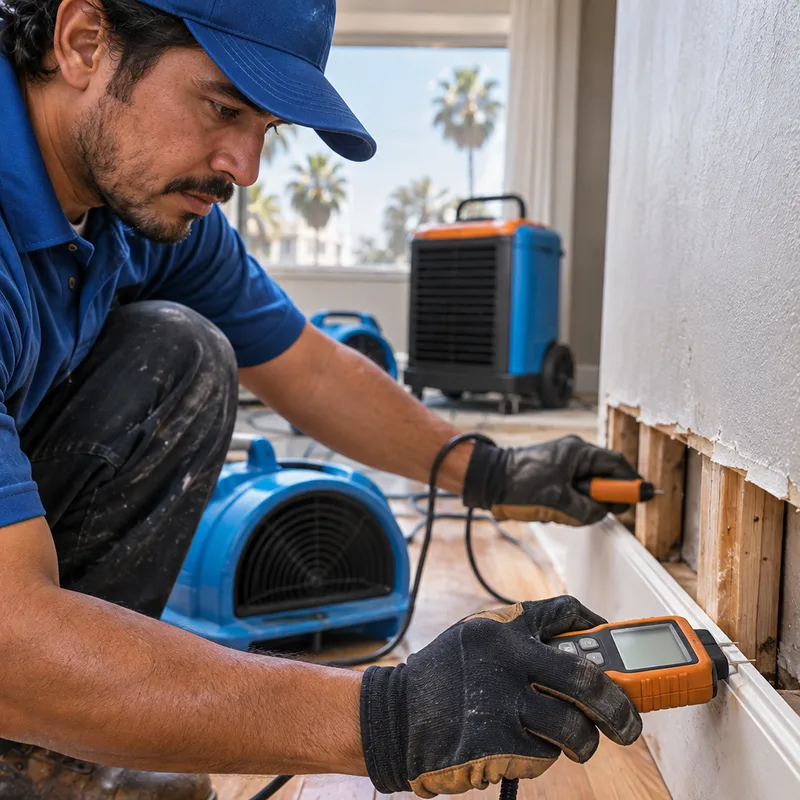
Moisture meters and thermal imaging can help locate affected areas beyond visible staining. Readings from drywall, wood, concrete, cabinets, and flooring guide the drying plan and help identify concealed moisture.

Controlled Drying

Air movers promote evaporation while commercial dehumidifiers remove moisture from the air. Equipment placement depends on room dimensions, material types, temperature, humidity, and the location of wet assemblies.

Selective Material Removal

Materials that cannot be cleaned or dried reliably may need controlled removal. This can include wet insulation, damaged drywall, saturated pad, or unstable finishes. Removal is limited to what access and drying conditions require.

Progress Documentation

Photos, moisture readings, equipment records, and scope notes document changing conditions. These records can support communication with property managers, occupants, and insurance representatives.

Water Mitigation in Long Beach, CA Requires Measured Drying

Close view of a technician taking moisture readings at a baseboard and wall cavity while air movers and a dehumidifier operate nearby.
Moisture readings guide equipment placement and confirm drying progress.

A room can look dry while moisture remains under flooring, behind baseboards, inside insulation, or within cabinet toe kicks. Surface appearance is therefore not a reliable endpoint. Professional mitigation uses initial readings to establish affected areas, then compares later measurements with appropriate dry standards for similar materials.

Long Beach's coastal setting can bring humid air that slows evaporation, particularly when windows are open or indoor air is not contained. Drying chambers, controlled airflow, and dehumidification help create better conditions. Equipment should remain positioned according to actual readings, not moved simply because a surface feels dry.

Material type matters too. Drywall, plaster, plywood, engineered flooring, solid wood, and concrete respond differently to water. Hardwood may need specialized floor mats or panel systems that draw moisture through seams. Plaster can sometimes remain in place when it is stable and the wall cavity can be dried. Laminate and particleboard often lose structural integrity after substantial saturation. Each decision should account for water category, exposure time, material condition, and the feasibility of cleaning and drying.

Our Water Mitigation Process

  1. 01

    Assess the Source and Conditions

    The technician identifies the apparent source, checks whether water is still entering, reviews safety concerns, and determines whether the water is clean, gray, or contaminated. This classification affects handling, cleaning, and material-removal decisions.

  2. 02

    Inspect and Document Affected Areas

    Visible damage is recorded and moisture measurements are taken in nearby walls, floors, ceilings, and built-in materials. The inspection looks beyond the obvious wet spot because water can travel through seams, cavities, and lower levels.

  3. 03

    Extract Water and Remove Unsalvageable Materials

    Standing water is extracted first. Saturated or contaminated materials that cannot be dried safely are removed as needed, with attention to keeping the work area controlled.

  4. 04

    Set Drying Equipment

    Air movers and dehumidifiers are placed to support evaporation and moisture removal. Containment or negative air equipment may be used when conditions require greater control of dust, odors, or affected air.

  5. 05

    Monitor Drying Progress

    Readings are checked during the drying period, and equipment is adjusted as conditions change. Monitoring helps prevent equipment from being removed too early or operating longer than the affected materials require.

  6. 06

    Confirm Completion

    Final readings are compared with dry reference materials or accepted drying goals. The team documents the outcome and identifies any remaining repairs needed after mitigation.

Clean Water, Gray Water, and Contaminated Water

The source and condition of the water determine what can be cleaned, dried, or retained. Category 1 water begins from a sanitary source, such as a supply-line break, but its condition can deteriorate after contact with dirty surfaces or extended exposure. Category 2 water contains enough contamination to cause illness if mishandled. Category 3 water is heavily contaminated and includes sewage and some forms of outdoor flooding.

These categories are not judgments based only on color or odor. A technician considers the source, what the water contacted, how long it remained, and whether heat or other conditions may have supported microbial activity. Porous materials exposed to contaminated water often require removal rather than drying in place. Hard, nonporous surfaces may be cleaned and treated when their condition permits.

If water came through a ceiling, the affected area may include insulation and the floor assembly above. If it spread from a washing machine or dishwasher, cabinets and floating floors can trap moisture beyond the visible edge. In multistory Downtown buildings, coordination with management may also be needed to inspect neighboring units or shared building components.

Protecting the Building While Mitigation Is Underway

A properly contained water mitigation work area in a Long Beach multifamily property, with protected flooring, commercial dehumidification equipment, and safe equipment routing.

Mitigation should limit additional damage while preserving unaffected areas. Floor protection, containment, careful equipment routing, and controlled demolition help keep the work zone organized. In occupied homes, the setup should also account for children, pets, noise, heat from equipment, and safe walking paths.

Residents in Bluff Park and Belmont Shore often live in older homes or multifamily properties where water can move through original wall assemblies and between units. Access may require coordination with landlords, homeowners associations, or adjacent occupants. In commercial spaces, work may be staged so staff can maintain safe access to unaffected areas when conditions permit.

Long Beach CA Water Damage Restoration can also organize photographs, moisture logs, and scope notes for the property owner. Insurance coverage depends on the policy and cause of loss, so mitigation authorization and coverage approval are separate matters. Property owners should report the incident promptly, preserve relevant records, and ask their insurer what documentation is required.

Water continues moving after the visible flow stops. Prompt inspection can identify concealed moisture and establish a drying plan before avoidable damage develops.

Call Now (562) 362-3304

Water Mitigation Questions from Long Beach Property Owners

How quickly should water mitigation begin?
Water mitigation should begin as soon as the source is controlled and the area is safe to enter. Wet drywall, insulation, wood, and flooring can hold moisture after standing water disappears. In humid coastal air, open windows may not provide effective drying, so extraction and controlled dehumidification should not be delayed.
How long does professional drying usually take?
Many contained water losses require several days of active drying, but the actual timeline depends on materials, saturation, humidity, access, and whether wall or floor cavities are involved. Plaster walls in an older Belmont Heights residence may dry differently from drywall in a newer condominium. Daily or scheduled moisture readings determine when equipment can be removed.
Can wet drywall and hardwood floors be saved?
Some wet drywall and hardwood can be dried in place when the water is reasonably clean, the materials remain stable, and drying begins promptly. Contamination, delamination, swelling, trapped insulation, or prolonged exposure may make removal necessary. Moisture readings and physical condition guide that decision.
Does water mitigation include rebuilding?
Water mitigation generally covers damage control, extraction, cleaning, selective removal, drying, and documentation rather than complete rebuilding. Replacement drywall, paint, cabinets, trim, and finished flooring may be handled after the structure reaches appropriate drying goals. The mitigation scope should distinguish drying work from later repairs.
Will insurance cover water mitigation in Long Beach?
Coverage depends on the cause of loss and the terms of the property policy. Sudden supply-line failures may be treated differently from long-term leakage, deferred maintenance, sewer backup, or coastal flooding. The insurer makes the coverage decision, while photos, moisture records, and an itemized mitigation scope document the work performed.
Can occupants remain in the property during drying?
Occupants can sometimes remain when the affected area is limited, utilities are safe, and equipment does not block required exits or essential rooms. Relocation may be appropriate when sewage, electrical hazards, extensive demolition, high noise, or unsafe indoor conditions are present. Multifamily properties in Downtown Long Beach may also require management approval for equipment placement and access.
Should I turn off drying equipment at night?
Drying equipment should generally remain operating continuously unless a technician or safety issue requires shutdown. Interrupting air movement or dehumidification can lengthen the drying period. If equipment overheats, trips a breaker, leaks, or creates another hazard, stop using the affected unit and request guidance.
Stop Water Damage Before It Spreads

Describe where the water came from, when it started, and which rooms or materials are affected. Long Beach CA Water Damage Restoration will help determine the next practical step and prepare a clear mitigation scope.