google-site-verification: googlec3070f037ee47936.html
Water Remediation · Long Beach

Water Remediation in Long Beach, CA

Prompt extraction, controlled structural drying, careful cleanup, and a documented plan for returning your property to a dry, stable condition.

Moisture-Mapped Drying Careful Cleanup Long Beach Properties
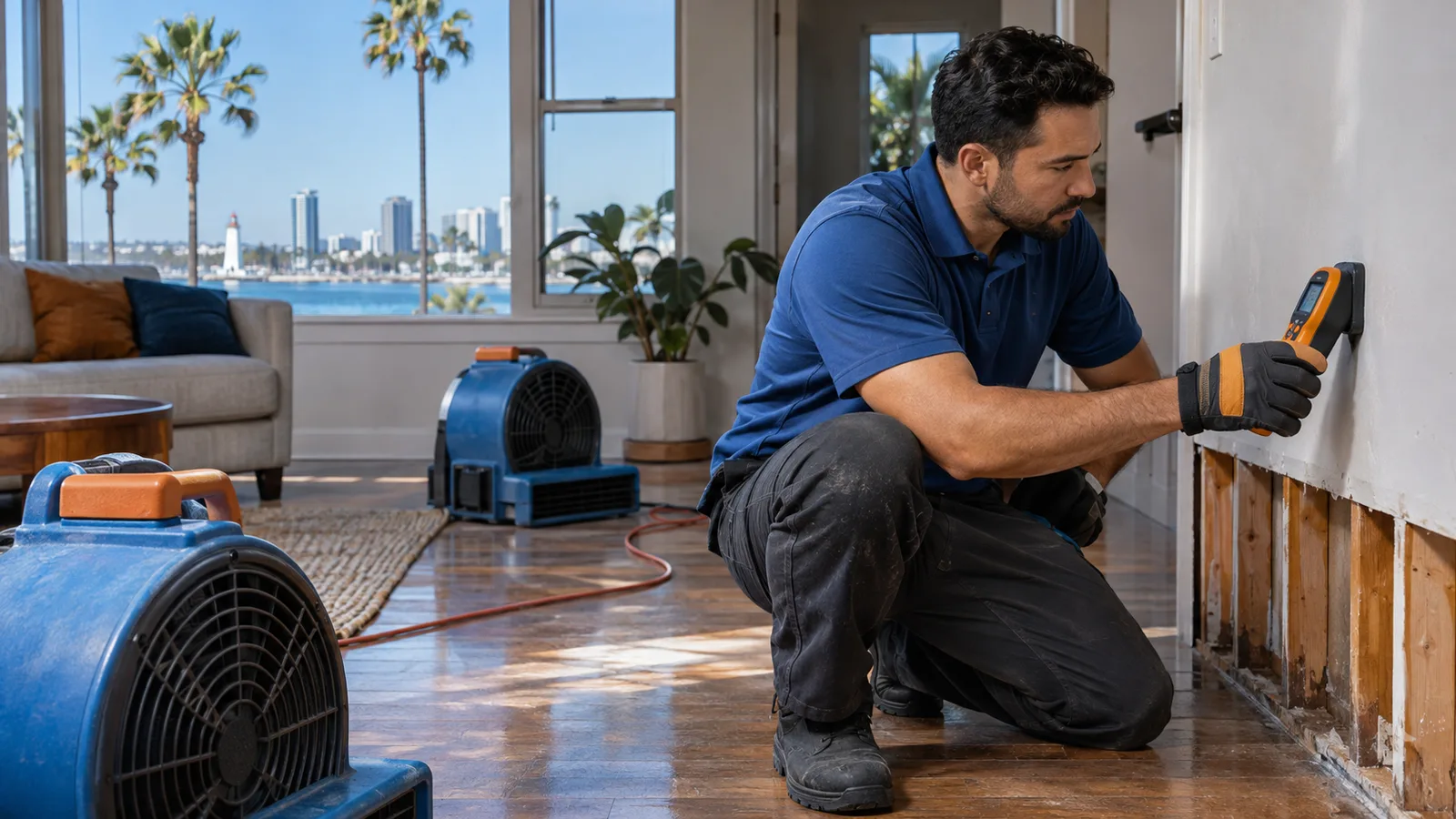
A water remediation technician using a moisture meter beside professional air movers in a Long Beach residential interior.

A Clear Response to Indoor Water Damage

Water remediation in Long Beach, CA starts with finding where the water traveled, not simply removing what is visible. Moisture can spread beneath flooring, wick into drywall, collect inside cabinets, and remain in wall cavities after the surface appears dry. Prompt assessment helps limit that spread and identifies materials that can be dried, cleaned, or removed.

Long Beach CA Water Damage Restoration approaches each loss according to the source, affected materials, and extent of migration. Our specialists use moisture readings to establish the affected area, extract standing water, set drying equipment, and verify progress before equipment is removed. The goal is a properly documented dry condition rather than a room that merely looks better.

Local building types require different plans. Older homes in Belmont Heights may contain plaster walls, hardwood flooring, and enclosed cavities that need careful moisture mapping. Downtown Long Beach condominiums can involve shared walls, elevator access, and building management coordination. Properties near the coast in Belmont Shore already experience humid marine air, which may affect equipment placement and drying conditions. In every setting, the plan should respond to the building rather than rely on a fixed equipment package.
What Water Remediation Covers

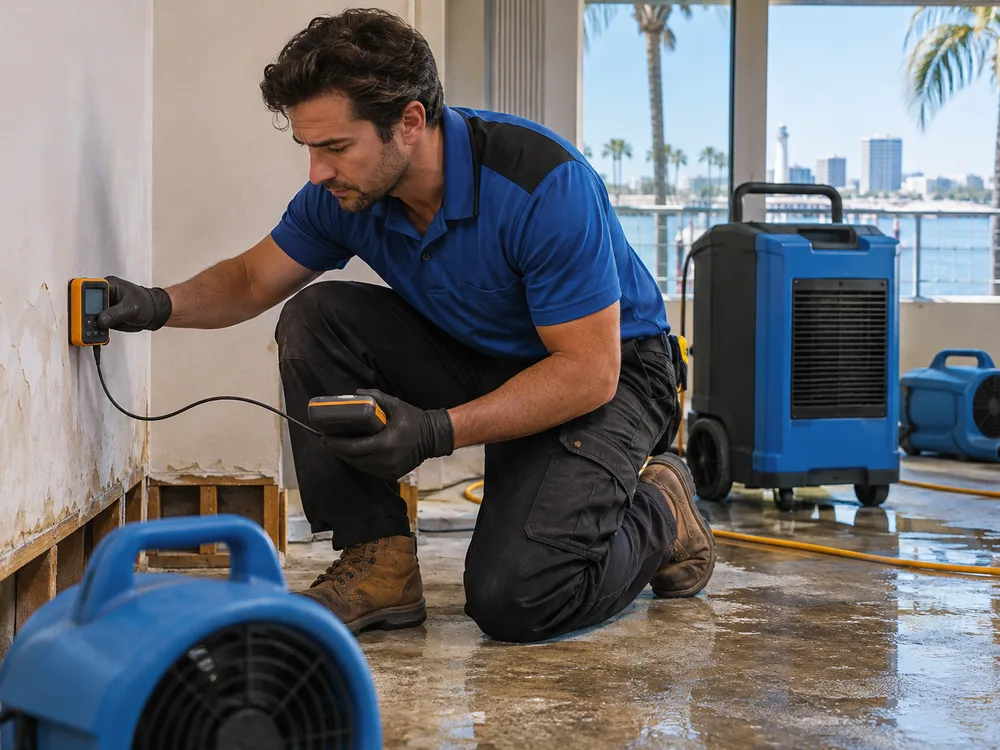
A technician mapping moisture in drywall and flooring with a meter while dehumidifiers and air movers operate in a water-affected room.

Remediation addresses the water, affected materials, contamination concerns, and drying conditions as one coordinated job. The scope may include source confirmation, standing-water extraction, removal of unsalvageable porous materials, cleaning, antimicrobial treatment when appropriate, dehumidification, and structural drying.

Water source matters. Clean water from a supply line may become more contaminated after prolonged contact with building materials. Water from an appliance discharge or other used-water source requires stricter cleaning decisions. Sewage and other grossly contaminated water call for containment, personal protective equipment, controlled removal, and disposal of affected porous materials. Remediation should begin only after an active leak is stopped or isolated.

The team may use extraction tools, low-grain refrigerant dehumidifiers, air movers, HEPA-filtered air scrubbers, thermal imaging, and penetrating or non-penetrating moisture meters. Equipment is selected for the actual conditions. Thermal imaging can help locate temperature patterns associated with moisture, but meter readings are needed to confirm whether a material is wet.

Common Water Problems We Address

Plumbing and Supply-Line Leaks

A failed hose, pipe, valve, or fixture can release water into floors and wall cavities. After the source is controlled, extraction and moisture mapping define the drying area.

Appliance Overflows

Dishwashers, washing machines, refrigerators, and water heaters can affect flooring, cabinets, baseboards, and adjacent rooms. The water source and elapsed time guide cleaning and removal decisions.

Roof and Window Intrusion

Rain entering through a damaged roof assembly or opening may wet insulation, ceilings, framing, and finishes. The exterior source must be corrected before interior drying can succeed.

Toilet and Drain Backups

Backup water may contain harmful contaminants. The response can require isolation, controlled demolition, detailed cleaning, and safe disposal rather than drying porous materials in place.

Hidden or Slow Leaks

Discoloration, musty odor, swollen trim, or lifting flooring can signal moisture that has been present for some time. Inspection helps determine the boundaries and whether deterioration has occurred.

Multi-Unit Water Migration

In condominiums and apartments, water can move between floors or across shared assemblies. Access, documentation, and communication with property representatives become part of the work.

Our Water Remediation Process

  1. 01

    Assess Safety and Stop Ongoing Water

    The first priority is confirming that the area can be entered safely and that the source has been stopped or isolated. Electrical hazards, sagging ceilings, contaminated water, and slippery surfaces require extra caution.

  2. 02

    Inspect and Map Moisture

    Technicians examine affected rooms and nearby areas because water often travels farther than visible staining suggests. Material-specific readings establish a moisture map and provide a baseline for drying.

  3. 03

    Extract Standing Water

    Portable or truck-mounted extraction equipment removes bulk water where access and conditions allow. Efficient extraction reduces the amount of moisture that dehumidifiers must pull from the air and materials.

  4. 04

    Remove Materials That Cannot Be Saved

    Contaminated, delaminated, or physically damaged materials may need controlled removal. Salvage decisions depend on porosity, water category, exposure time, condition, and whether the material can be cleaned and dried.

  5. 05

    Dry and Clean the Structure

    Air movers promote evaporation while dehumidifiers remove moisture from the air. Cleaning procedures address residue and contaminants, and containment may be used to prevent debris from spreading.

  6. 06

    Monitor and Confirm Drying

    Drying is checked with repeat measurements, not appearance alone. Equipment settings may be adjusted as conditions change, and completion is based on suitable material readings and the agreed drying goals.

Water continues moving through porous materials after a leak, so early assessment can reduce the area that requires removal. Describe what happened and which rooms are affected so the next steps can be planned promptly.

Call Now (562) 362-3304

Water Remediation Long Beach CA Properties Can Rely On

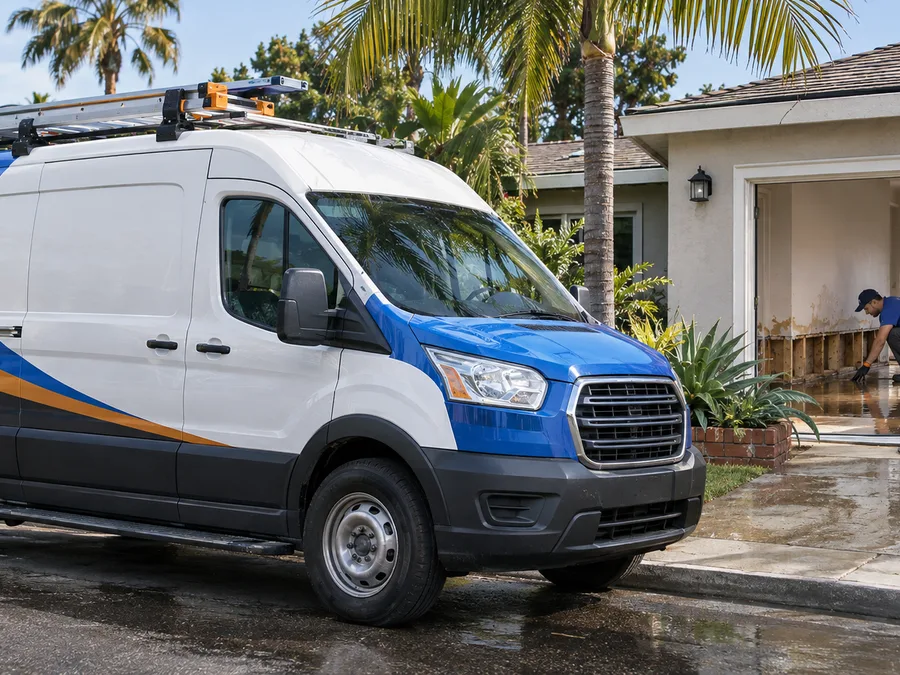
A remediation crew unloading drying and extraction equipment outside a recognizable Long Beach multi-unit residential property without displaying private address details.

Long Beach properties range from detached houses to high-rise residences, storefronts, and mixed-use buildings. In Bluff Park and Alamitos Beach, older buildings may have layered finishes or less accessible wall and floor cavities. In Naples, waterfront exposure can raise ambient humidity, so technicians must compare indoor readings with current conditions instead of relying on a standard drying duration. Commercial spaces along Downtown corridors may also require phased access to protect unaffected operations.

The City of Long Beach Development Services Department may become relevant when restoration requires permitted reconstruction, structural alterations, or work on regulated building systems. The remediation phase itself focuses on removing water, cleaning affected areas, drying the structure, and documenting conditions. 

Before work starts, occupants should mention known asbestos or lead concerns, prior leaks, recent remodeling, and any restrictions imposed by a property manager or homeowners association. Buildings with older materials may require testing before disturbed finishes are removed. A responsible crew pauses for those requirements rather than treating every wall assembly the same way.

Drying Standards and Documentation

A sound drying plan uses measurable targets. Technicians commonly record the initial moisture condition, equipment placement, temperature, relative humidity, and material readings during monitoring visits. These records show how conditions changed and help determine when drying is complete. Dry standards may be based on comparable unaffected materials in the same building when appropriate.

Air movement and dehumidification need balance. Too little airflow slows evaporation. Poorly directed airflow can spread dust or affect sensitive finishes, while excessive heat can damage some materials. Containment and negative air pressure may be used when demolition creates dust or when contaminated materials are removed. HEPA filtration captures fine airborne particles but does not replace physical cleaning.

Repairs cannot begin until the areas affected are suitably dry and clean. The final scope should separate emergency services, remediation work, and reconstruction so property owners can understand what was performed and what remains.

Water Remediation Questions from Long Beach Property Owners

How quickly can water remediation begin in Long Beach, CA?
Water remediation should begin as soon as the source is controlled and the property is safe to enter. Active leaks can keep feeding concealed cavities, and porous finishes continue absorbing moisture. Access in a Downtown Long Beach high-rise may require building approval or elevator coordination, so sharing those restrictions early helps the crew plan equipment and entry.
How long does structural drying usually take?
Structural drying often takes several days, but no fixed duration applies to every loss. The water source, saturation level, material type, airflow, ambient humidity, and access to concealed areas all affect timing. Coastal humidity near Belmont Shore can influence drying conditions, so completion should be based on moisture readings rather than a preset number of days.
Can wet drywall, flooring, and cabinets be saved?
Some wet materials can be saved when the water source is suitable, damage is limited, and drying begins promptly. Painted drywall may dry in place under controlled conditions, while swollen composite cabinets, delaminated flooring, contaminated carpet pad, or sewage-affected drywall often require removal. Moisture readings and physical condition determine the recommendation.
Does homeowners insurance cover water remediation?
Coverage often depends on the cause and terms of the individual policy. Sudden accidental releases may be treated differently from long-term seepage, maintenance problems, groundwater, or flooding from outside the building. Document the source and affected areas, take reasonable steps to prevent further damage, and ask the insurer what records and approvals it requires.
Do I need to leave the property during remediation?
Temporary relocation may be recommended when sewage, extensive demolition, electrical hazards, strong odors, or inaccessible living areas make occupancy unsafe or impractical. Smaller clean-water losses can sometimes be isolated while the property remains occupied. In a Long Beach condominium, building rules and the effect on shared corridors or neighboring units may also influence that decision.
Will remediation prevent mold growth?
Prompt water removal and controlled drying reduce the conditions that support mold growth, but no contractor should promise that mold can never occur. Materials that remained wet for an extended period may need closer inspection or removal. If visible growth is found, containment and cleaning methods should match the affected material and the size of the area.

Start With a Clear Remediation Plan

Tell us where the water came from, when it was discovered, and which areas appear to be affected. We will help define the immediate work, drying approach, and documentation needed to move the property toward repair.