google-site-verification: googlec3070f037ee47936.html
Water Extraction Service · Long Beach

Water Extraction Long Beach CA

Prompt removal of standing water, careful moisture tracking, and a clear drying plan for homes and commercial properties.

Homes & Commercial Properties Moisture-Reading Based Long Beach Service
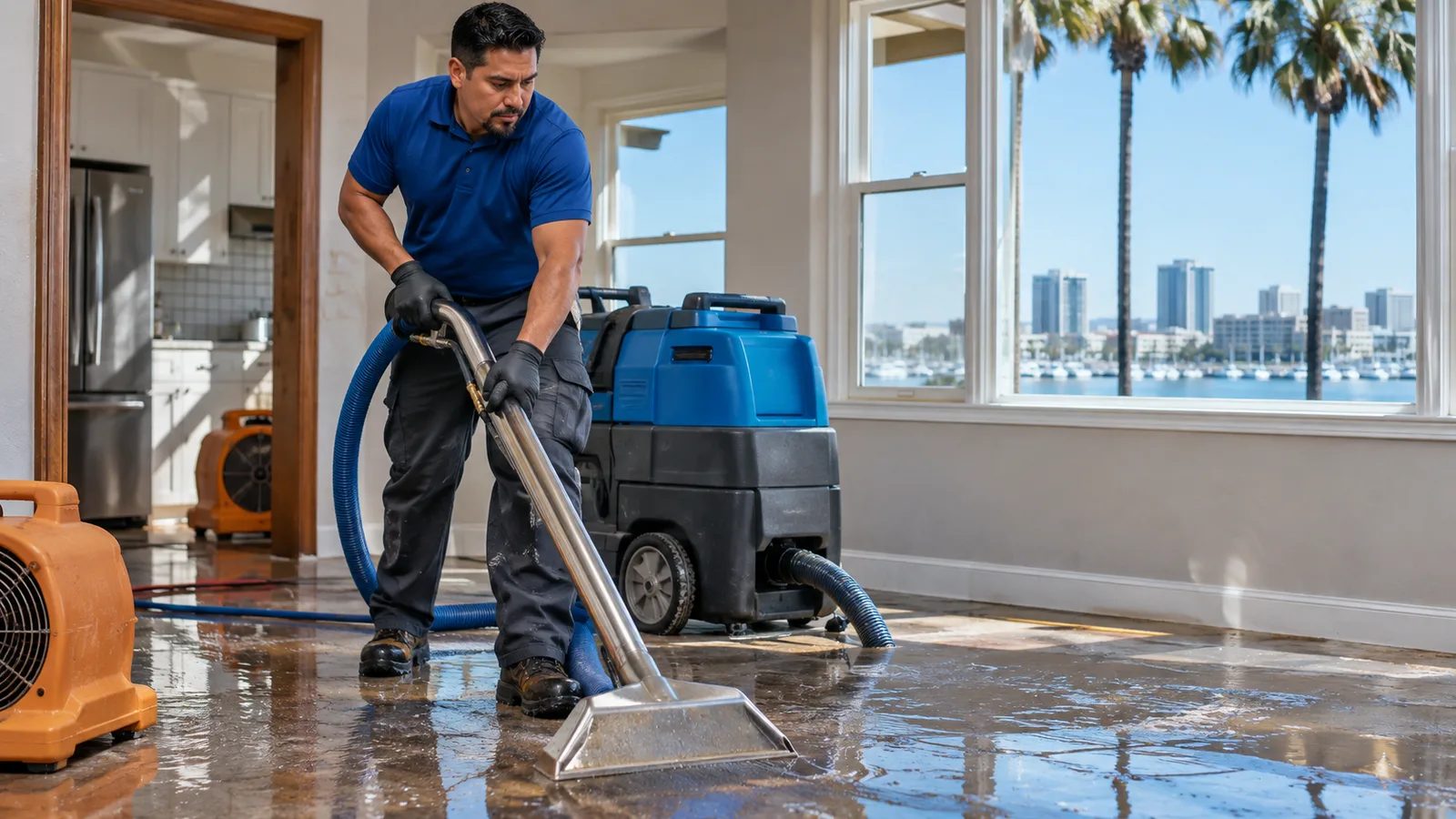
A trained water extraction technician operating a commercial portable extractor on a wet residential floor in Long Beach.

Fast Action When Water Is Spreading

Water extraction in Long Beach, CA should begin as soon as the source is stopped and the affected area is safe to enter. Standing water can move beneath flooring, soak drywall, reach cabinets, and enter adjoining rooms. Removing visible water is the first task, but the job also requires locating moisture that cannot be seen from the surface.

Long Beach CA Water Damage Restoration provides extraction for homes, apartments, offices, retail spaces, and other local properties. We assess affected materials, remove recoverable standing water, and establish drying goals based on moisture readings. We document the scope so property owners understand which areas are wet and what equipment is being used.

Local buildings vary widely. Belmont Shore properties may have tight lots and limited equipment access, while Downtown Long Beach apartments can require coordination with building management and attention to neighboring units. In Naples, water can spread through closely arranged rooms before it becomes visible. Older homes in California Heights may contain layered flooring or plaster assemblies that call for careful moisture checks rather than assumptions based on surface appearance.
What Professional Water Extraction Covers

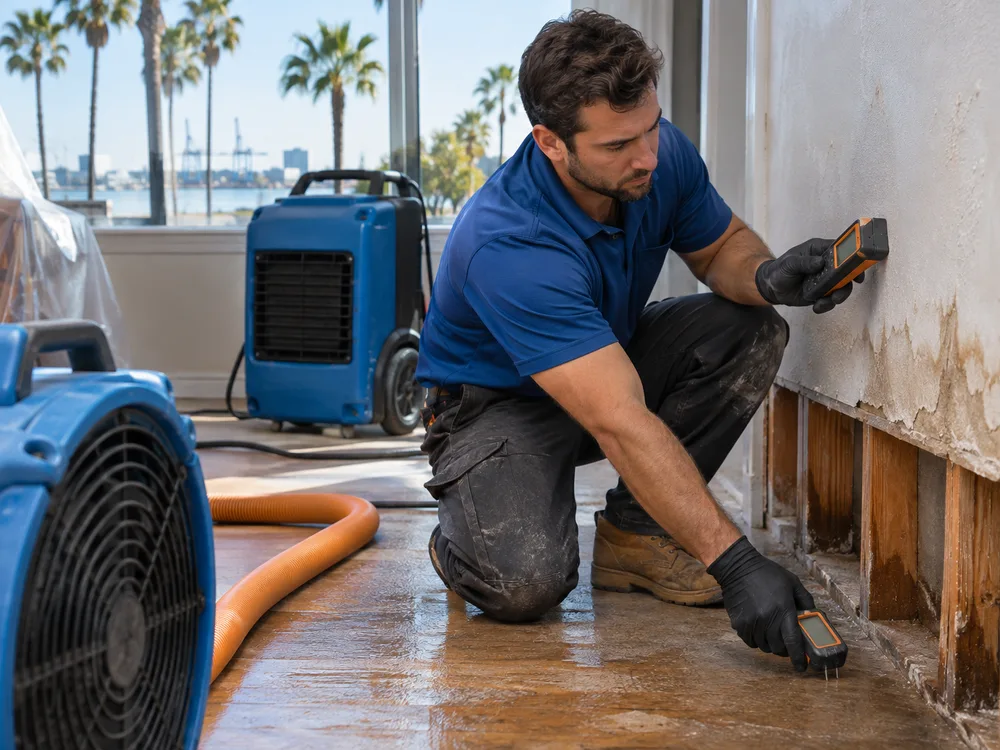
A water extraction technician checking a Long Beach home's wall and floor with a pin moisture meter while extraction equipment operates nearby.
Instrument readings help define the wet area and guide equipment placement.

Extraction equipment removes bulk water much faster than towels, household vacuums, or passive evaporation. Depending on the surface and depth, technicians may use submersible pumps, truck-mounted extraction, portable extractors, weighted extraction tools, or specialized attachments for carpet and hard flooring. Household shop vacuums are not appropriate when electrical hazards or contaminated water may be present.

After bulk water is removed, moisture meters and thermal imaging can help identify affected areas. Thermal images show temperature differences, not moisture by themselves, so suspicious readings should be verified with a meter. Technicians may check baseboards, drywall, carpet pad, subflooring, cabinets, and wall cavities. Air movers and dehumidifiers then address moisture that extraction alone cannot remove.

The water source also affects handling. Clean supply-line water is managed differently from water containing sewage or other contaminants. Porous materials exposed to contaminated water may need removal instead of drying in place. The initial inspection determines which methods are suitable and whether environmental or material-specific concerns require added precautions.

Common Situations That Require Extraction

Plumbing and Appliance Releases

Broken supply lines, overflowing fixtures, and failed appliance connections can release water quickly. Extraction limits migration into flooring, cabinets, walls, and adjacent rooms once the source has been controlled.

Roof and Storm Intrusion

Rain entering through a damaged roof, window, or exterior opening may collect in ceilings and wall assemblies before reaching the floor. Safe access and source control come before extraction.

Unit-to-Unit Water Migration

In Downtown and East Village Arts District multifamily buildings, water may travel between units through floor assemblies, plumbing penetrations, and shared walls. Inspection should account for spaces beside and beneath the reported loss.

Commercial Water Removal

Retail, office, and hospitality properties may require phased extraction to protect accessible areas and account for operating constraints. Equipment placement should preserve safe walkways and electrical clearance.

Our Water Extraction Process in Long Beach, CA

  1. 01

    Safety and Source Check

    The affected area is reviewed for active leaks, electrical exposure, weakened materials, contamination, and other hazards. The water source must be stopped or isolated before extraction can proceed safely.

  2. 02

    Moisture Mapping

    Visible damage is documented, and moisture readings establish how far water has traveled. Checks may include flooring, lower wall areas, cabinets, adjoining rooms, and accessible spaces beneath the affected area.

  3. 03

    Bulk Water Removal

    Pumps or extractors remove standing water. The equipment selected depends on water depth, surface type, access, contamination category, and whether carpet or other materials can remain in place.

  4. 04

    Material Assessment

    Wet materials are evaluated for drying potential. Carpet pad, swollen composite materials, contaminated porous contents, or damaged drywall may require removal when they cannot be cleaned and dried safely.

  5. 05

    Drying and Monitoring

    Air movers and dehumidifiers are positioned according to the affected area. Moisture readings are taken during drying so equipment can be adjusted and removed based on measured progress rather than surface appearance.

  6. 06

    Completion Review

    Final readings are compared with appropriate dry reference materials in unaffected areas. The work record can include photos, readings, equipment use, and notes about materials that need repair or replacement.

Extraction Is Only the First Part of Drying

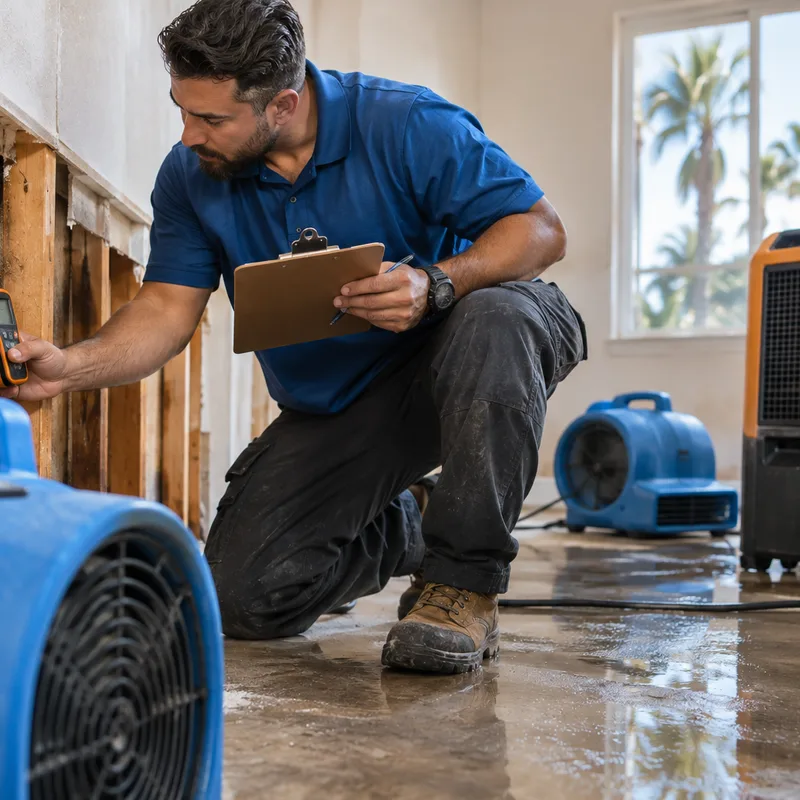
Close view of commercial air movers and a dehumidifier arranged across a water-affected room, with a technician recording moisture readings.
Extraction removes bulk water; controlled airflow and dehumidification address moisture retained by materials.

A floor can feel dry while moisture remains in carpet backing, underlayment, subflooring, wall cavities, or the toe-kick space beneath cabinets. That is why professional extraction continues into controlled structural drying. Air movement promotes evaporation, while dehumidification removes moisture from the air. Equipment quantity and placement should respond to the actual wet area and building materials.

Ventilation is not automatically the right answer. Long Beach's coastal humidity can reduce the benefit of opening windows, especially when outdoor air contains more moisture than the controlled indoor environment. A closed drying chamber may provide better conditions. Indoor temperature, relative humidity, and material readings guide that decision.

Concrete, wood, gypsum, carpet, and insulation release moisture at different rates. Some assemblies can be dried with limited disturbance, while others require access openings or material removal. Drying time should be based on repeat measurements, not a fixed promise.

A Clear Scope for Property Owners and Managers

Before work proceeds, the scope should identify affected rooms, planned extraction methods, materials requiring further evaluation, equipment needs, and access concerns. For apartments and managed properties, responsibility for the water source and access to adjoining units may need to be coordinated with the owner or building manager. If the incident involves a utility-owned water main or public infrastructure, the City of Long Beach Utilities Department may be an appropriate point of contact; private plumbing failures remain the property owner's responsibility.

Photographs, moisture records, and itemized work descriptions can help when an insurance claim is involved. Coverage depends on the policy and cause of loss, so restoration personnel cannot determine whether a claim will be approved. Property owners should report the incident promptly, keep available records, and ask their insurer what documentation is required.

Long Beach CA Water Damage Restoration focuses the initial visit on immediate conditions and practical next steps. You receive an explanation of what is wet, what can be extracted, what needs drying, and which conditions may require removal or repair.

Early extraction can reduce how far water travels through floors and walls. Arrange an assessment while the affected materials are still accessible and the source conditions are clear.

Call Now (562) 362-3304

Water Extraction Questions from Long Beach Property Owners

How quickly can water extraction begin in Long Beach?
Water extraction can begin once the source is controlled and the area is safe to enter. Access, electrical hazards, contamination, and the amount of standing water affect the start. Multifamily properties in Downtown Long Beach may also require building-management access to utility rooms, neighboring units, or secured areas.
How long does extraction and drying usually take?
Bulk water extraction may take several hours, while structural drying often takes several days. The duration depends on how far water traveled, which materials became wet, indoor conditions, and how quickly the source was stopped. Moisture readings, rather than a preset schedule, determine when drying equipment is ready for removal.
Can wet carpet be saved after a water release?
Some carpet can be retained when the water is sanitary, extraction begins promptly, and the carpet has not suffered physical damage. The pad may require separate evaluation or removal. Carpet exposed to sewage or other contaminated water generally needs more restrictive handling because porous materials can hold contaminants.
Do I need water extraction if there is no standing water left?
Extraction or structural drying may still be needed when water has entered carpet pad, subflooring, drywall, cabinets, or wall cavities. Evaporation can remove the visible puddle while leaving materials wet. Moisture-meter readings help determine whether active drying is warranted.
Will insurance pay for water extraction in Long Beach?
Coverage depends on the policy, the cause of the water release, and any exclusions. Sudden plumbing failures may be treated differently from long-term seepage, maintenance issues, flooding, or sewer backup. Notify the insurer promptly and keep photos, moisture records, invoices, and a written description of the work.
Is it safe to extract water with a household wet vacuum?
A household wet vacuum is unsuitable when water may contact energized wiring, contain sewage, or involve unstable building materials. Even with a small clean-water release, the appliance must be rated for liquid pickup and connected safely. Professional equipment is more appropriate when water has spread beneath finishes or across multiple rooms.

Stop Standing Water from Spreading Further

Describe the source, affected rooms, and when the water release began. Long Beach CA Water Damage Restoration will assess the conditions and outline the extraction and drying work the property requires.