google-site-verification: googlec3070f037ee47936.html
Water Damage Service · Long Beach

Water Damage Long Beach

Fast water removal, careful structural drying, and practical repairs for homes and businesses affected by leaks, overflows, or flooding.

Homes & Businesses Measured Structural Drying Long Beach Service
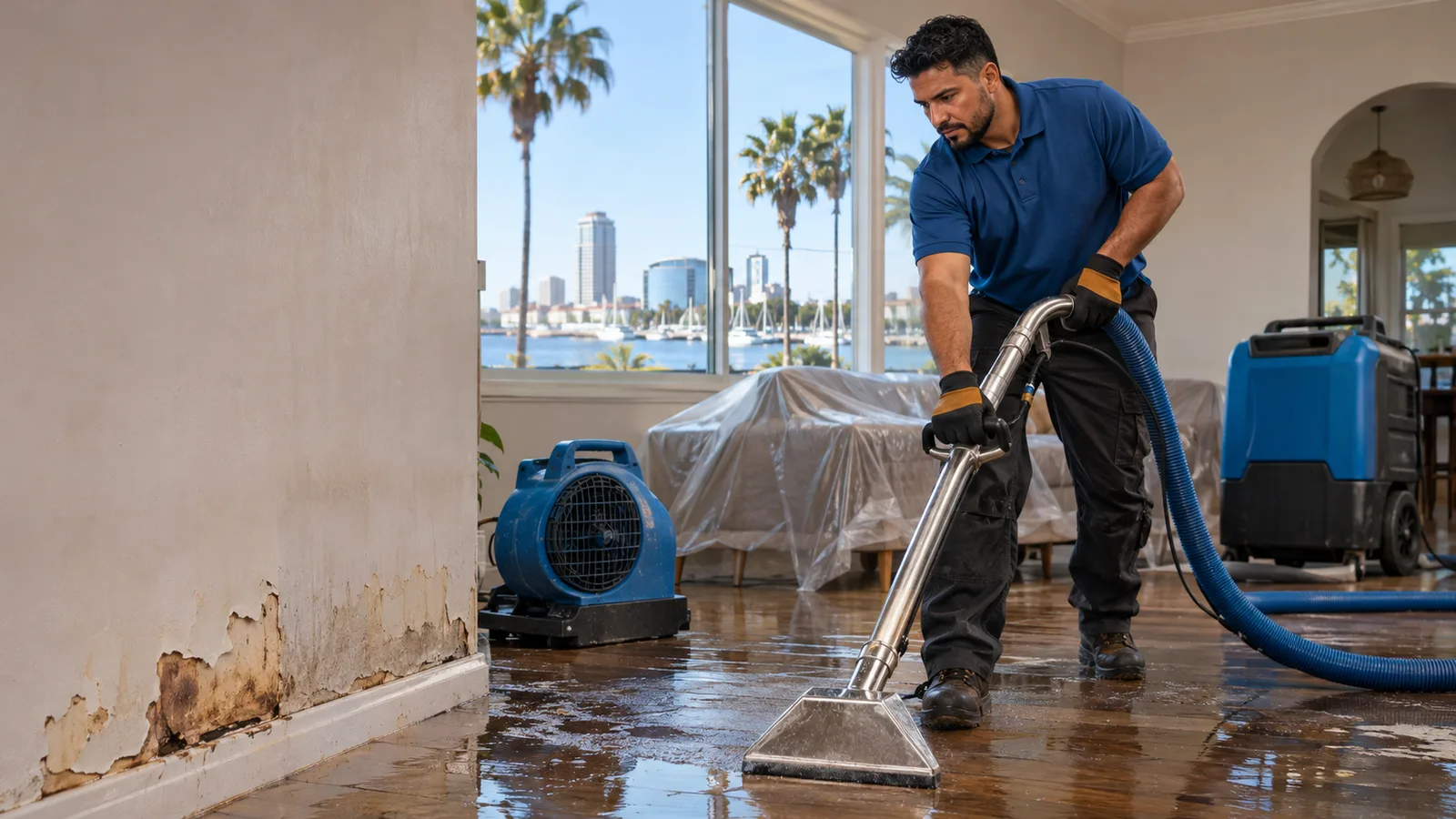
A water damage technician using commercial extraction equipment inside a Long Beach home after a supply line leak.

Local Help When Water Gets Inside

Water damage in Long Beach needs prompt attention because moisture can move under flooring, behind baseboards, and into wall cavities before the surface looks dry. Long Beach CA Water Damage Restoration identifies the source, removes standing water, measures affected materials, and builds a drying plan around the property rather than relying on appearance alone.

We handle residential and commercial losses caused by plumbing failures, appliance leaks, roof intrusion, overflowing fixtures, and stormwater. The work begins with safety and source control. Water near electrical equipment, sagging ceilings, contaminated water, or an active leak should not be approached until the immediate hazard has been assessed.

Local buildings require different strategies. Older homes in Belmont Heights may have plaster walls and original wood flooring that call for controlled drying. Multifamily properties in Alamitos Beach can involve moisture moving between units or through shared wall and ceiling assemblies. Downtown Long Beach commercial spaces may require phased work to protect inventory and limit disruption. In Naples, low-lying waterfront conditions make exterior water entry and crawl-space checks especially relevant after severe weather or drainage problems.
What Professional Water Damage Cleanup Covers

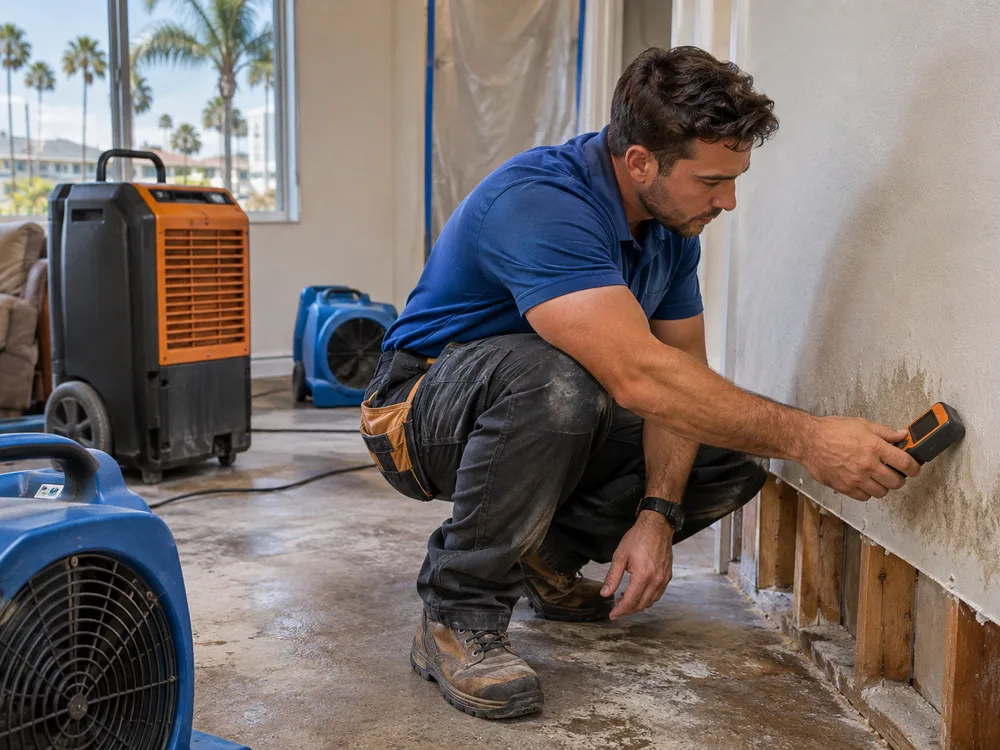
A technician documenting moisture readings at a wall and floor junction while air movers and a dehumidifier dry the room.
Meter readings help define the affected area and track drying progress.

A complete response addresses both visible water and moisture hidden inside the building assembly. Technicians use moisture meters, thermal imaging as a screening tool, and targeted inspection to map the affected area. Thermal images can indicate temperature differences associated with moisture, but meter readings are used to verify whether a material is wet.

Standing water is removed with pumps or extractors. Carpet and pad may be lifted or removed when necessary, while hard-surface flooring is evaluated for water beneath it. Air movers increase evaporation and commercial dehumidifiers collect moisture from the air. Equipment placement and drying progress should be adjusted using recorded moisture readings rather than an arbitrary rental period.

The condition of the water also affects the work. Clean water from a supply pipe can become more contaminated after contact with building materials or prolonged exposure. Water involving sewage, drain backups, or outdoor flooding requires stricter containment, personal protective equipment, removal of porous materials, and cleaning with products appropriate for the affected surfaces.

Water Damage Services for Homes and Businesses

Emergency Water Extraction

Standing water is pumped or extracted to reduce continued absorption into flooring, drywall, cabinets, and contents.

Moisture Inspection

Affected rooms and adjoining spaces are checked for moisture migration, including wall cavities, subfloors, ceilings, and accessible crawl spaces.

Structural Drying

Air movers and dehumidifiers are arranged around the materials involved, then adjusted as documented readings show drying progress.

Removal and Cleaning

Materials that cannot be safely dried are removed as needed. Remaining surfaces are cleaned according to the water source and level of contamination.

Contents Protection

Furniture, stored goods, and business inventory may be moved, blocked, covered, or documented to create access and reduce secondary damage.

Repair Coordination

Once drying is complete, the damaged area can be prepared for repairs such as drywall replacement, painting, trim work, or flooring installation.

Our Water Damage Restoration Process

  1. 01

    Assess the Source and Safety Risks

    The first inspection identifies where the water came from, whether the flow has stopped, which areas are affected, and whether electrical, structural, or contamination hazards are present.

  2. 02

    Document Moisture and Conditions

    Technicians map wet materials, take relevant photographs, and establish initial moisture readings. This creates a factual basis for the scope of work.

  3. 03

    Extract Water and Remove Barriers

    Standing water is removed. Baseboards, saturated pad, damaged drywall, or other materials may be opened or removed when they prevent access to trapped moisture.

  4. 04

    Dry and Monitor the Structure

    Airflow and dehumidification are matched to the affected space. Readings are checked during the drying period so equipment can be repositioned or removed when appropriate.

  5. 05

    Clean and Prepare for Repair

    Affected surfaces are cleaned based on the water category and material. A final moisture check confirms whether the area is ready for repair and normal use.

Why Hidden Moisture Matters

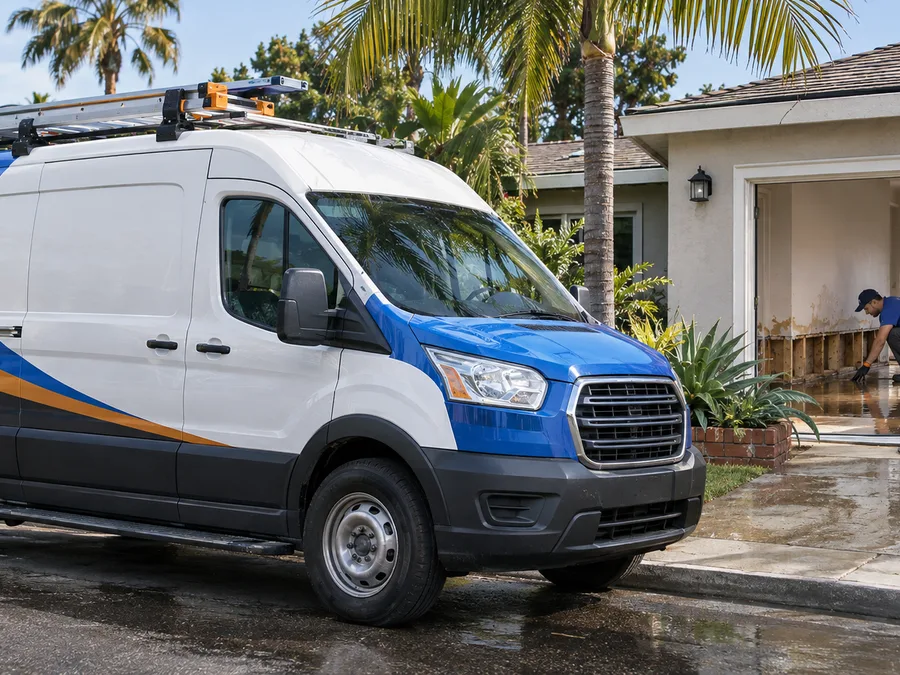
A close view of a moisture meter checking drywall beside a removed baseboard, with the wall cavity exposed for controlled drying.
Surface appearance alone cannot confirm that concealed materials are dry.

Water rarely stays where it first appears. A dishwasher leak can travel beneath cabinets and flooring. Water released upstairs can enter insulation, ceiling cavities, and the wall framing on the floor beneath. Concrete slabs can also hold moisture beneath finish flooring even after visible water has been removed.

Odor, lifted flooring, staining, soft drywall, and swollen trim can indicate retained moisture, but the absence of these signs does not confirm that an assembly is dry. Prompt inspection is especially useful in compact multifamily buildings around Alamitos Beach, where a leak in one unit may affect a neighboring unit or common area. In older Belmont Shore properties, layered finishes and previous renovations can create concealed paths that require methodical checking.

Mold can begin developing when materials remain wet, although no fixed deadline applies to every building or loss. Temperature, humidity, material type, contamination, and ventilation all affect the risk. Fast extraction and measured drying are the practical ways to reduce that risk.

Insurance Documentation and Clear Scope

Property insurance may cover sudden and accidental water damage, but coverage depends on the policy, the cause, exclusions, and maintenance history. Gradual leakage, groundwater, floodwater, sewage backup, and the failed plumbing component itself may be treated differently. The insurer makes the coverage decision.

Useful documentation can include photographs, moisture maps, equipment records, material removal notes, and an itemized scope. If a claim is being considered, report the loss promptly and ask the carrier what it needs. Reasonable steps to stop ongoing damage should not be delayed while waiting for an adjuster, provided conditions are safe. Keep damaged materials when practical until disposal is authorized or thoroughly documented.

Long Beach CA Water Damage Restoration explains what appears wet, what may be salvageable, and why removal may be recommended. Customers should receive a scope that distinguishes emergency mitigation from later repair work so responsibilities and costs are easier to understand.

The sooner wet materials are assessed, the more options there may be for controlled drying and selective removal. Get a documented plan based on the source, affected materials, and current moisture readings.

Call Now (562) 362-3304

Water Damage Long Beach FAQs

How quickly should water damage be addressed?
Water damage should be addressed as soon as the area is safe to enter. Moisture continues moving through porous materials after standing water disappears, so early extraction and measurement can reduce unnecessary demolition. If water is near electrical equipment, the ceiling is sagging, or sewage is involved, avoid the area until the hazard has been assessed.
How long does structural drying usually take?
Structural drying often takes several days, but the correct duration depends on the materials, saturation, airflow, humidity, and whether moisture is trapped beneath flooring or inside cavities. Coastal humidity in Long Beach can affect evaporation, so equipment should remain until meter readings confirm that the drying goal has been reached.
Can wet drywall and wood flooring be saved?
Some wet drywall and wood flooring can be dried, but salvageability depends on contamination, swelling, delamination, finish layers, and how long the material remained wet. Clean-water losses allow more drying options than sewage or outdoor floodwater. Plaster and original wood floors in older Long Beach homes often require slower, closely monitored drying.
Does homeowners insurance cover water damage in Long Beach?
Homeowners insurance often covers sudden and accidental water damage, but every claim depends on the policy and cause. A burst supply line may be treated differently from long-term seepage or external flooding. The City of Long Beach participates in the National Flood Insurance Program, and standard property policies generally do not replace separate flood coverage.
Do I need to leave the property during cleanup?
Temporary relocation may be recommended when sewage, major demolition, electrical hazards, loss of essential facilities, or extensive containment makes occupancy unsafe or impractical. A limited clean-water loss may allow normal occupancy outside the work area. The decision should be based on site conditions, household health needs, and access to kitchens or bathrooms.
Should I clean sewage or outdoor floodwater myself?
Sewage and outdoor floodwater should be treated as contaminated and are poor candidates for do-it-yourself cleanup. These losses may require containment, protective equipment, controlled removal of porous materials, and detailed cleaning. Keep people and pets away, avoid spreading contamination through the building, and arrange a professional assessment.

Get a Clear Plan for Your Water Damage

Describe what happened, when it started, and which rooms are affected. Long Beach CA Water Damage Restoration will help determine the next steps for extraction, drying, cleanup, and repair.